
How Nathanael Emmons
Relates to the
Heresy of Decisional Regeneration
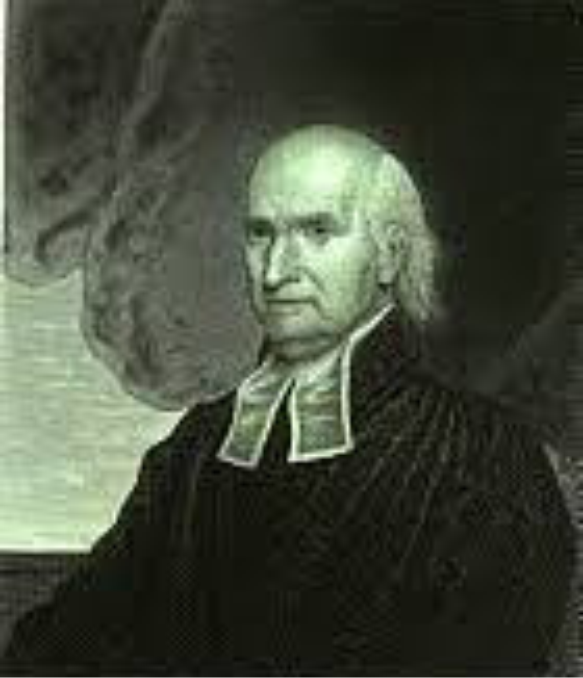
Nathanael Emmons (1745-1840)
How Nathanael Emmons
Nathanael Emmons (1745-1840) |
|
Nathanael Emmons (1745-1840) was best known, for half a century, as the theologian who continued the New England Way, while Scottish Common Sense Realism became the premier salvation theology. The New England Way was a Calvinist salvation theology first taught by Jonathan Edwards in the First Great Awakening, and passed onto Samuel Hopkins. Emmons started with Hopkins theology and clarified how Biblical salvation would look to sinners and saints before and after supernatural regeneration and the indwelling of the Holy Spirit. Without abandoning the tenets of Calvin, he explained how election did not prevent the agressive presentation of the Gospel to all sinners with the insistence that they immediately believe on the Lord Jesus Christ and submit to His Lordship unconditionally. His system declared that holiness and sin are free voluntary exercises; that men, including sinners, act freely under the divine agency; that the slightest transgression deserves eternal punishment; that it's through God's saving grace alone that the penitent is pardoned and justified; that, in spite of total depravity, sinners ought to repent; and that regeneration is active, not passive, with the believer. Unfortunately, many Calvinists in Emmons day believed the verbal restrictive theory of Scottish Common Sense Realism, but Emmons, like Hopkins, Bellamy, Jonathan Edwards Junior, and many other Calvinists continued to believe the Holy Spirit is not limited in any way from immediately affecting sinners and saints for His glory. Emmonsism was spread and perpetuated by more than a hundred clergymen, whom he personally trained. He cherished a very high opinion of Dr. Hopkins, and was willing to be called a Hopkinsian, and often gave himself this label. But it is well known, that he did not believe all that Hopkins published. For example, Hopkins taught that men are passive in regeneration; Emmons, that they are active. This made an important difference in their views on many subjects. Another salvation theology that developed during the lifetime of Emmons was the New Haven Theology of Nathaniel William Taylor. This also was not a continuation of the New England Way.Taylor abandoned teachings that were, up to that time, considered an essential part of traditional Calvinist Theology. The following is taken from Nathanael Emmons Works. Chapter 4 His Theological Opinions, taken from the Memoir of Nathanael Emmons He resembled Edwards and Hopkins, not only in the leading principles of their theology, but in their hostility to involuntary servitude, and in the fearless and decided manner in which they raised their voice against this sin. Much has been said respecting the theological opinions of Doctor Emmons. While not a few have received them, and thought them an improvement upon the theology of the age, others have considered them both false and dangerous. In the latter class, there are many well meaning and intelligent men, some of whom have read his works, and understand his system. But it is a fact which cannot be questioned, that those among the reputedly orthodox who consider his system essentially false, are generally speaking, persons who are partially or wholly unacquainted with his writings. A perusal of his works is that only which can give the reader a full and accurate knowledge of his opinions. But from the following document found among his papers after his decease, the complexion of his theology may at once be seen. I have endeavored to show, 1. That holiness and sin consist in free voluntary affections or exercises. 2. That men can act freely under the divine agency. 3. That the least transgression of the divine law deserves eternal punishment. 4. That right and wrong are founded in the nature of things. 5. That the posterity of Adam are guilty of no sin, but their own free voluntary selfish affections. 6. That God exercises mere grace in pardoning or justifying penitent believers through the atonement of Christ, and mere goodness in rewarding them for their good works, 7. That the hearts of sinners are, by nature, totally depraved. 8. That God has a right, nothwithstanding their total depravity, to require them to turn from sin to holiness. 9. That preachers of the gospel ought to exhort sinners to love God, repent of sin, and believe in Christ immediately. 10. That sinners do not perform one holy and acceptable act until they exercise pure disinterested love. 11. That sinners must exercise unconditional. submission to God, before they can exercise saving faith in Christ. 12. 'That men are active and not passive in regeneration. These are doctrines which I have preached in the general course of my ministry, some of which I have endeavored to set in a clearer light than I have ever seen done by any others. This outline of Christian doctrines will not be thought to comprise all the subjects on which he preached and wrote. They are but a few of the many which were made familiar to his people, and which are now to be found in his publications. Nor will it be thought, that all these are doctrines which are peculiar to him, or which no one else believed or taught before him. The object of this outline is merely to indicate the topics on which the leading features of his instruction might be seen. The question has sometimes been asked, What has Doctor Emmons taught that is new? or what are the improvements which he has made in theological science? A full and definite answer to these questions would require a more extensive and perfect knowledge of theological opinions, than the writer pretends to possess. He does not hesitate to say, however, that Dr. Emmons has applied the principle of voluntary action to the subject of theology more successfully than any divine that has gone before him. If he was not the first that discovered the truth that all sin and holiness consist in action, or in voluntary exercises of the mind, he was the first to make an extensive use of this principle in explaining the doctrines of the gospel. By common consent, the “Exercise scheme” is his. He not only believed with others, that much of the sin and holiness of men consists in their voluntary affections, but that all of it does; and this principle he carried out in all its bearings upon the subject of human depravity, the connection of Adam with his posterity, the doctrine of regeneration, the free agency and accountability of man, and the government of God. From this principle it follows that the depravity of mankind is not a corrupt nature inherited from Adam, but their own voluntary opposition to God; that regeneration consists not in the implantation of a new principle distinct from the affections of the mind, but in a change in the affections themselves from sin to holiness; that God does not require men to alter the nature which he has given them, or to make themselves new faculties or powers, but to exercise that holiness of heart, for which he has given them the requisite capacity. If the position that all holiness and sin consists in moral exercises be a mistake, and it is found to be true that mankind are really praise or blame worthy for that in which they have no activity; much of what Dr. Emmons has written, and which his friends highly esteem as important improvements in theology, will doubtless be found among “the wood, hay and stubble” which will be burned up at the last day. But if it be a fact that all sin and holiness primarily consists in moral exercises, it must be admitted that he has made great improvements in the theology of the age. Whether he was the first to discover this fact or not, it is certain that no other man has made so extensive and important use of it as he, in explaining, reconciling, and defending the doctrines of the gospel. Admit the fact, and the conclusion becomes irresistible. No intelligent man who admits the one, will deny the other. That mankind are active while acted upon; or in other words, that they are free moral agents in doing that which the agency of God disposes them to do, is a distinguishing feature of Dr. Emmons’ theology. The Arminian view of (Dugald ) Stewart (1753-1828, influential leader of Scottish Common Sense Realism), (Thomas) Reid (1710-1796, influential leader of Scottish Common Sense Realism), (Samuel) Clarke (1675-1729, influential leader of English enlightenment) and others, is, that just so far as the creature is free and accountable, so far he is independent of divine power and influence, and just so far as he is dependent, he is passive. Edwards rejected this principle in part, but not wholly. The same may be said of Hopkins; for they both held that the creature is passive in regeneration, and in receiving a sinful nature. But with his mind established in the truth, that all sin and holiness must consist in voluntary exercises, Dr. Emmons discovered, what it is strange no one ever discovered before, that man is active while acted upon. For ages it seems to have been well understood, that sinners are acted upon by the Holy Spirit in regeneration. But Dr. Emmons perceived that the scriptures as clearly taught the agency of man in this change as the agency of God, and proved the entire consistency of the one with the other. Should it be said that others before him admitted this fact to some extent, and taught it in some instances, it will not be pretended that any one ever carried it out as he has done. He believed that God exercised a real, a universal and a constant agency over all his intelligent creatures, and that at the same time they enjoyed the most perfect freedom conceivable. He never made the agency of God limit the freedom of the creature, or the freedom of the creature counteract the will of God. In all his addresses to God, and descriptions of his character, he speaks to and of him, as doing all his pleasure in heaven above, and on earth beneath. In all his addresses to man, he speaks to and of him, as a free moral agent, capable of doing or not doing the whole will of God, and as accountable for the manner in which he improves the powers which God has given him. With his views of human and divine agency, it is not difficult to see that the one is consistent with the other. It was his belief that the agency of God consisted entirely in his volition, and that the agency of man consists entirely in his volition. The agency of God in the conversion of Paul, for instance, was the will of the Holy Ghost that he should voluntarily turn from sin to holiness. The agency of Paul, in his own conversion, was the spontaneous surrender of his heart to that Saviour who was before the object of his hatred and persecution. Now with this view of divine and human agency, who can say that the one is inconsistent with the other? Who will affirm that there is even the appearance of inconsistency between them? Was Paul’s voluntary surrender of his heart to Christ, in any way inconsistent with the choice or will of the Holy Ghost that he should do this? Was the power of Paul to receive the Saviour voluntarily, destroyed or in any way diminished by the will of God that he should thus receive him? According to the definition of divine agency given by Dr. Emmons, all that God did to harden the heart of Pharaoh, or to move him to refuse to let the people go, was to will or choose, all things considered, that he should voluntarily or freely refuse to let them go. But was the exertion of such an agency as this upon him, in the least degree inconsistent with his own free moral agency? Could not Pharaoh himself refuse to let the people go when God chose he should do it, as well as though God had made no such choice? Could not Pharaoh act as freely in refusing to let the people go, under the influence of the divine will that he should do so, as he could have done, if God had formed no choice respecting it? Or, in other words, did the will of God that Pharaoh should do this thing freely of his own accord, and in a manner perfectly consistent with his own accountability, have any tendency to prevent his doing it? These questions can receive but one answer. If both the agency of God, and the agency of men, in all their moral acts, consists in their volition, there is no conceivable inconsistency between them. Upon this supposition man is as really an agent, and as free an agent, as he could be if there were no other being in the universe. If the definition of divine agency, which has been given by Dr. Emmons, is admitted, there is no longer any question as to its directness or indirectness.. Many admit that God exerts an agency of some sort upon the hearts of men, while they contend that if this agency is positive and direct, it must destroy the free agency of man. But who would ever think of talking about an indirect or negative volition? or rather, who would think of denying that the will of God is always direct and positive? Is there any thing conceivable, which he does not either choose or refuse? He may bring an event to pass with means, or without them. But does he, or can he, render means in any case effectual, without willing their success ? Many, who object strongly to the writings of Dr. Emmons as carrying the doctrine of divine agency too far, fully believe with the Assembly of Divines at Westminster, “that God has fore-ordained whatsoever comes to pass.” They pretend also to receive the opinions of Calvin, Edwards, Bellamy and Dwight on this subject. But it is well known that all these divines, as well as the pilgrim fathers of New England generally, believed that the will of God respects all events. It was their united opinion, that all things take place according to his choice. Dr. Dwight says, “All things, both beings and events, exist in exact accordance with the purpose, pleasure, or what is commonly called the decrees, of God.” And after quoting Revelation 4:11, “ For thou hast created all things, and for thy pleasure they are, and were created,” he observes, “ In this passage it is asserted, that all things were created and exist, for the pleasure of God. It is irresistibly inferred, therefore, that they exist according to his pleasure.” ‘To what is expressed in these quotations, every orthodox man in New England will accede. But it is confidently believed, that they necessarily imply the most obnoxious opinions, which Dr. Emmons has ever expressed on the subject of divine agency. They certainly imply, that all things without exception exist in accordance with the will or choice of God. Now if the agency of God consists in his will or choice, all things considered, then it follows without a question, that his agency is exerted in every event that takes place. But it will probably be said, that these divines did not mean the same thing by the agency of God as Emmons did. Though they admitted, with him, that the will of God respects every event, yet they did not believe that his agency consists in mere volition. Perhaps they all did not. ‘Their ideas on this subject are not very definitely expressed. But did any of them believe that God does nothing to bring to pass what he wills or chooses, all things considered, shall take place? Or, in other words, does he in any case forbear to act in reference to the object of his choice? This will not be pretended. It then follows undeniably, that his agency is as universal and particular as the objects of his choice. Besides, Dr. Dwight not only admits that the will of God respects all events, but that his agency consists in his volition, and in nothing else. His fifth argument in support of the proposition; That all things, both beings and events, exist in exact accordance with the purpose, pleasure, or what is commonly called the decrees of God, is in these words: “ This choice of God that things should exist, is the only divine energy, and the only cause of existence. The energy of mind is its will; and this is synonymous with its choice generally understood ; each act of the will being no other than an act of choice. What is thus true of every finite mind, is eminently true of the Infinite Mind.” Again he says, “It is metaphysically proper to say, that God wills all things into existence ; or that they are produced by his choice, in the full sense in which any effect is said to be produced by its efficient cause.” It is not intended, by quoting this passage, to make it appear that Dr. Dwight actually believed on this subject just as Dr. Emmons did; but simply to show that all which the latter contends for on the subject of divine agency is necessarily implied in what the former has written; and that no man who admits the full and obvious import of the language used by the one, can consistently object to the real meaning of the other. Some who think that Dr. Emmons’ theory of divine agency makes God the author of sin, have opposed to this an indirect universal agency. Their meaning appears to be this: God does not directly operate upon the hearts of men, either in the production of sin or holiness; but has so arranged second causes, and designedly so arranged them, that the motives exhibited before the minds of men will produce just such a state of things as now exists. It is proper in their view to say that the agency of God is universal, because he has made and arranged all the second causes which are in operation, with a view to the ultimate result. But he is not, properly speaking, the author of the sin or holiness of his creatures, because the agency which he exerts is the exhibition of motives to the mind, rather than a direct influence upon the heart. But what difference does it make as it respects the moral character of the action, whether God produces sin and holiness directly by his own agency upon the hearts of men, or by a designed exhibition of motives, which it is foreseen will certainly produce the same effect? If the old maxim, “Qui facit per alium, facit per se,” (“He who acts through another acts himself”), be a true one, who will consider the latter mode of operation any more consistent with his goodness than the former? This theory does not meet the difficulty in the case fairly. It only puts it a little farther off, and thereby renders it the more difficult to manage. If there is any theory that will relieve the subject under consideration from embarrassment, it is that which has been adopted by Dr. Emmons, viz: That agency consists in volition, and that all men are active while acted upon. But the improvement which Dr. Emmons has made in the science of theology does not consist so much in the discovery of truths entirely new, as in presenting those which have long been taught by others, in a more clear, definite and consistent light. In his investigations of older divines, he not only found many errors mingled with important truths, but many of these truths attempted to be sustained by unsound arguments. In numerous instances, he has made that perfectly plain which was before obscure, and reconciled propositions, which, as stated in the language of others, seemed to involve a contradiction. He used to say, “I have spent the greater part of my time in making joints.” Nothing which he has written has been more strenuously opposed than his views of unconditional submission. Though he has advanced nothing new on this subject, nothing more than was taught before him by Calvin and Hopkins, and many others; yet the opposition made to him as a preacher and writer has been as strong on this ground as on any other. He did teach that mankind ought to be conditionally willing to suffer the just punishment of their sins. His views on this subject may perhaps be the most advantageously exhibited in this place by quoting a letter, which he once wrote to a niece of his. She, it seems, had heard a Mr. S. preach a sermon, in which he raised a number of plausible objections against that kind of submission which Dr. Emmons was supposed to inculcate. She took notes of these objections, and sent them to him, with a request that he would favor her with an answer to them. He wrote her the following letter. My Dear Niece,— I have read Mr. S’s arguments against unconditional submission, which appear to me more plausible than conclusive. Submission is as well understood, I believe, as resignation; and either term properly signifies a willingness to suffer any evil which God pleases to inflict. This willingness, however, does not imply any love to evil, but only love to God who inflicts it. Love to God is always implied in submission, which can flow from no other source. None but a regenerate person, or if you please, none but a Christian, ever exercises submission to God under any evil which God inflicts, whether small or great. Indeed, the same spirit of benevolence which will dispose a person to submit to God under the least evil, will dispose him to submit to God under the greatest; because God appears as amiable in inflicting the greatest, as in inflicting the least evil. The difficulty, if there be any in this question, lies not in determining the nature or degree of submission, but in determining when any regenerate person or real Christian ought to be willing that God should destroy him in a future state. To set this point in as clear a light as I can, I would observe, 1. That a person may be regenerated, and yet not know that he is so. Though regeneration consists in new affections, and he may know, in the time of it, that he does exercise new affections, yet he may not know that his new affections are holy affections; and consequently not know that he is the subject of a saving change, and a real child of God. He may be in this dark and doubtful state, for days, or weeks, or even for months, after his heart is renewed. This many a Christian has declared when he made a public profession of religion. 2. A renewed person or real Christian, who does not know that he is renewed, cannot know that he is entitled to eternal life, according to the promises of the gospel. Though it be true that he is entitled to eternal life, yet he sees no evidence of it so long as he sees no evidence of being a subject of saving grace. Therefore, 3. A regenerate person or real Christian, in such a situation, must view himself as exposed to future misery. As he does not view himself as a believer, he must view himself to be an unbeliever, and actually deserving and exposed to the punishment of an unbeliever; or, in other words, he must suppose that God is as much disposed to punish him for ever as any other sinner. 4. While a regenerate person or real Christian thus views himself under a sentence of condemnation, he certainly ought to be willing that God should execute that sentence of condemnation upon him. He certainly must be willing that God should do this, or else he is unwilling. But to be unwilling, is practically saying that God shall not reign over him, or dispose of him as shall be most for his own glory. Now I ask Mr. S., or any other person, how a real subject of grace ought to feel in such a situation as this? You will say he ought to desire salvation. I say so too. But ought he to desire salvation absolutely, or unconditionally, whether he be a subject of grace or not? He does not know that he is a subject of grace, or that he ever will be. And therefore, he does not know but God is morally obliged, according to the threatening of his law, and according to his eternal decree, to cast him off for ever. And should he, in this situation, stand and contend with his Maker, or cordially submit? I am now ready to meet the arguments or objections which you mention. Objection 1.—None but real Christians do exercise the virtue of true submission to God’s will under afflictions, or in the prospect of them. Answer.- This is said, and meant, as an objection against those who advocate unconditional submission, and is really the substance of all Mr. S. has said to refute the doctrine he opposes; for all the absurdities he endeavors to point out, as arising from the doctrine, are supposed to arise from the character and condition of a real Christian. But this is fighting against a man of straw, of his own make. The advocates of unconditional submission, who understand themselves, freely grant, that it is only the subjects of grace, or the real Christian, that does exercise true submission. I know indeed that Mr. Hooker and Mr. Shepard maintained, that a sinner under awakening and conviction must be willing to be cast off for ever, in order to prepare him for regeneration or true conversion. This we acknowledge is an erroneous opinion; and no Hopkinsian that I am acquainted with adopts this opinion. (Only regenerate persons, according to Hopkins, could be sincerely willing to be cast off forever if it be God’s will. The illuminated sinner, could never do this. The willingness to be cast off forever was the gold standard for evidence of supernatural regeneration in the Inquiry Room). Objection 2.—If we suppose a person submissively resigned to future misery, we must suppose him, of course, to be a Christian. Answer. — Freely and fully granted, as being nothing to the purpose. Objection 3.— We have, then, this incongruity presented. Here is a Christian, resigned to future evil, which can by no possibility take place under the government of God. For God cannot, without a sacrifice of his veracity, permit a real Christian to perish. Answer. — Very true; but what then? Though God cannot permit a real Christian to perish, and though a real Christian, who knows he is a real Christian, ought not to be willing that God should violate his promise, and cast him off for ever; yet, it by no means follows, that a real Christian, who does not know that he is a real Christian, ought not to be willing that God should cast him off for ever, if His own glory requires him to do it. And if he be not a Christian, as he supposes he is not, he cannot know but the glory of God will require him to cast him off for ever. His duty is precisely the same in his supposed situation as it would be if he were not a real Christian. Objection 4. — It follows, then, as the evil in question is not, under the government of God, a possible one, that a supposed resignation to it is not, and cannot be true submission; for true submission is resignation to present evils, or to those which are certain in prospect. This, therefore, is imaginary submission. It costs but little, and is worth still less, Answer. — A real Christian may exercise as real submission to a supposed evil, as to a real one. And if he does not exercise as real submission to a supposed evil, as to a real one, he is as guilty, as if the supposed evil had been a real evil. When Joseph’s brethren came to their father and made him believe that Joseph had been torn to pieces by a wild beast, ought not Jacob to have been submissive to God under his supposed bereavement? And was he not criminal in feeling, and saying as he did? —‘‘It is my son’s coat: an evil beast hath devoured him: Joseph is without doubt rent in pieces. And Jacob rent his clothes, and put sackcloth upon his loins, and mourned for his son many days. And all his sons and all his daughters rose up to comfort him, but he refused to be comforted.” — Though his son was not dead, yet he verily believed that he was dead, and that God had bereaved him of his darling. In this belief he was altogether inexcusable in refusing to submit to God, and to be comforted. And surely, if. he had submitted to this supposed, or if you please, imaginary evil, it would have cost him much, and been worth all the gold of Ophir. The application is easy. A real Christian, who believes he is not a real Christian, ought to be willing to suffer that future punishment, which God might inflict upon him, if he were, and always should be an impenitent sinner. Objection 5.— Imaginary submission can never be a real test of Christian character. Actual submission only is evidence of it. Indeed, no state of mind which depends upon the future, can ever be at present, evidence of a Christian temper. We appeal, and must appeal, to past experience, or present actual experience only, for a test of our religion. Submission, then, to a supposed misery that is future, is no evidence to us of religion, unless that misery is so certain that it becomes present. But in the case supposed, the misery is not only future but actually impossible. Answer. —Is it not a present evil, to expect and fear a future and eternal evil? Has it not been shown that a real Christian, who does not know, nor think, that he is a real Christian, has just ground to expect and fear a future and eternal evil? His fear is not imaginary, but real; and his submission ought not to be imaginary, but real. His case exactly resembles Jacob’s. He supposed his son was dead; and his supposition, though not founded in reality, was yet founded upon credible evidence, and such as carried full conviction to his mind, and laid him under moral obligation to be really and immediately submissive to the supposed will of God; yea, to the real will of God; for it was his revealed will that he should be submissive to him in the mournful situation in which he had really placed him. So it is the real will of God, that a real Christian, who does not know nor believe that he is a real Christian, should be at that time, whether before or after he has had a hope, willing that he should cast him off for ever, if his glory requires it, as he does not know but it may. I now ask whether unreserved submission to the divine disposal, is not directly calculated to remove the doubts of a doubting Christian; and whether any thing else can remove his doubts? Submission in this case is the test, and the only infallible test to himself of his Christian character. If a doubting Christian comes to be submissive to God whether he should save or destroy him, he then has an infallible evidence that he is a friend of God, and that God is his friend; which must remove his painful doubts. Objection 6.— There are other difficulties still, attending this speculation. A state of future misery, involves a state of future disobedience and rebellion against God. And we have already seen that submission can never be opposed to obedience. Submission to a state of future disobedience is absolute rebellion. Answer. —It is granted that present submission is inconsistent with present disobedience. No person in the actual exercise of submission to God, can, by that actual submission, disobey God. But how does it appear, that present submission to God is inconsistent with future disobedience to him? Does not a real Christian, in the morning of life, desire that God would not take him away in the midst of his days, but allow him to live longer in this world? But does he not expect, that, if he should live to the common age of man, he shall be guilty of more or less disobedience to God in that period? Is he not, then, willing, at present, to disobey God in future? And is his present willingness to disobey God in future, when he has told him that he shall not be perfect in this life, present disobedience? It is real submission to a certain, expected evil, which he hates in its own nature. But if a Christian may be submissive to God, in appointing him to disobedience in time; why may he not be submissive to God, in appointing him to disobedience in eternity? Supposing God had told Lucifer, the day before he disobeyed, I have determined that to-morrow you shall disobey. Ought not Lucifer to have said, from the heart, I submit: Not my will, but thine be done? And had he felt and said this, would his submission to future disobedience, have been present, actual disobedience? I leave it to Mr. S. to solve these cases of conscience, which I have mentioned: Objection 7. — But the question sometimes comes up in this form: If we could be assured, that it would be for the glory of God that we should be cast off, ought we not to acquiesce? And, in answer to this, I have simply to observe, that such an assurance is absolutely impossible. God cannot break his promises. God cannot change his character. It cannot be for his glory that those should be miserable for ever, who are submissive to his will. Of what use is it, then, to state and reason from cases that are impossible ones, and subversive of the whole nature and government of God, if they should occur? Much more, how can it be a test of Christian character, to conjecture how we should act and feel, or ought to act and feel, in cases that are actually impossible? Answer. —It is readily conceded, that a Christian, who does not know nor believe that he is a Christian, cannot be assured that it would be for the glory of God that he should be cast off; and it is asserted, on the other hand, that a Christian, who does not know nor believe that he is a Christian, cannot be assured that it would be for the glory of God that he should be saved. For God cannot break his promises, nor his purposes. The Christian, who does not know that he is a Christian, cannot know what God’s purposes are respecting him; and therefore, it is his present duty to be willing that He should execute his purposes, whether they are in his favor or against him. His present state of uncertainty requires him to exercise present submission, whether his future state should be either happy or miserable. And his present submission or opposition to God, in his present state of uncertainty, is a criterion, to determine whether he feels right or wrong at present ; but not to determine whether he is a real Christian or not. For though he may feel wrong in his present state of darkness, he may afterwards feel right, as Jacob did, after he had refused to submit and be comforted. Objection 8.—It is again asked, Is it not the duty of those who are cast off, to submit to their condition? And if you will only view this question as it respects different considerations, it is very easy to answer it. As to that part of the future state of condemnation, which involves disobedience and rebellion, it is no duty to submit to this, but to become obedient and cease from rebellion. And in regard to actual misery, fallen spirits are bound to acknowledge the justice of God in it, and their full desert of it. But it is their duty to repent and reform, and, were it possible, to deliver themselves from misery, though we have reason to believe that they will never do this. Answer.— The spirits in prison are undoubtedly bound cordially to acknowledge the justice of God in punishing them for ever, and cordially to acknowledge the sovereignty of God in continuing them in a state of moral depravity for ever. And the cordial acknowledgment of both the justice and sovereignty of God towards them, I should call perfect submission to God, both as to their sinfulness and misery... Mr. S. concludes his arguments or objections against unconditional submission with the following general observations, which deserve some notice: “On the whole it is a matter of regret, that this subject has been agitated in our churches. It is easy to perceive that much has been said upon it, without definite ideas of the nature of true submission; and much said against it with mistaken apprehensions of the design of those who advocate the affirmative. What is aimed at, I take to be these simple truths: The will of God is the rule of right, and creatures ought to submit to that will; the law of God is perfectly just, and we ought to approve of it, though it condemn our conduct; we ought to feel that we deserve to be cast off, and it is mere grace which delivers us from destruction. To these truths we all accede. Why not inculcate them then in this simple and intelligible form, and not endeavor to impress them by the statement of cases which are revolting to the feelings and impossible in the nature of things! Most of the disputants upon these subjects seem to me to have left submission undefined, and not to have distinguished between active obedience and suffering with resignation, or show how the one stood related to the other, or that the one can never interfere with the other. Answer, — Will not all those who are finally cast off at the last day, be constrained to accede, in their understandings and consciences, to these simple truths: ‘‘That the will of God is the rule of right, and creatures ought to submit to that will ; that the law of God is perfectly just, and they ought to approve of it, though it condemn their conduct; that they ought to feel that they deserve to be cast off, and that it would have been mere grace to have delivered them from eternal sin and misery ?”’ But will those who are finally cast off exercise any true submission? Is a sense of moral obligation to obey God the same as obeying him? Is a sense of our desert of being punished for disobeying God, the same as submitting to his hand and heart in punishing us? Is there any thing in Mr. S.’s definition of submission, that an unregenerate man, remaining unregenerate, may not feel and express? I regret that the doctrine of unconditional submission, has not been better defined, and more repeatedly and forcibly inculcated in our churches than it ever has been, and especially of late. ‘‘ Young men think old men to be fools;” but it would be well if young men would remember the last clause of the proverb. Yours, affectionately, Nathanael Emmons.
|
 |
To Contact the Author, click here